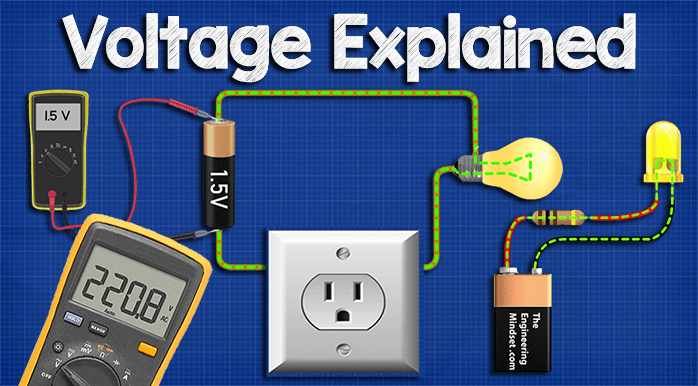
Electrical voltage basics. In this video we’re going to be discussing voltage, we’ll learn what is voltage and potential difference, how to measure voltage, the difference between direct and alternating voltage and current as well at why voltages vary around the world.
Voltage is what pushes electrons around a circuit. Without voltage the free electrons will move around between atoms but they move around randomly so they aren’t much use to us. It’s only when we apply voltage to a circuit that the free electrons will all move in the same direction, causing current.
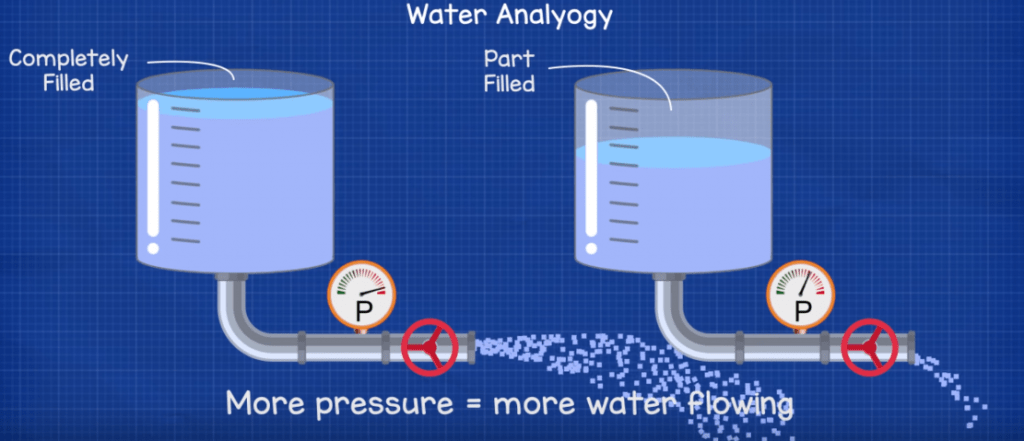
It’s easy to imagine voltage like pressure in a water pipe. If we have a vessel completely filled with water, then the mass of all that water is going to cause a huge amount of pressure at the end of the pipe.
If we have a water tank that’s only partly filled then there will be much less pressure in the pipe.
If we open the valve to let the water flow then more water will flow at a faster rate from the high pressure tank, compared to the low pressure tank. The same with electricity, the more voltage we have the more current can flow.
Voltage can exist without current. For example we can measure the pressure in a water pipe with the valve shut, with no water flowing, and from this we see that it is pressurised. What we’re really measuring in the pressure difference between what’s inside the pipe compared to the pressure outside.
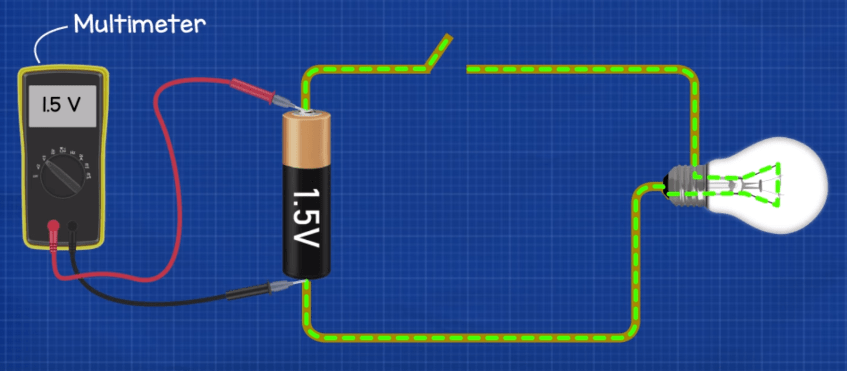
Same if we have a battery connected to a circuit with an open switch. The voltage is still present, we can measure that and as soon as that swtich closes it’s going to push the free electrons around the circuit.
We sometimes hear voltage referred to as potential difference. This really means how much work can potentially be done in a circuit.
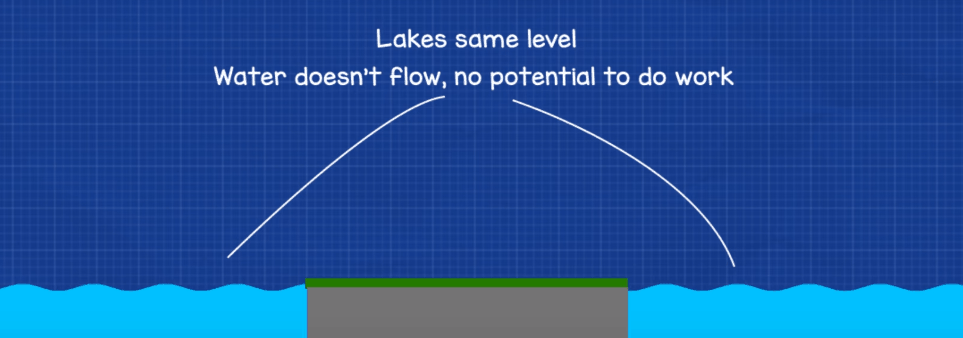
Coming back to our water analogy, if we have two lakes at the same level then there is no potential to do work because the water isn’t flowing.
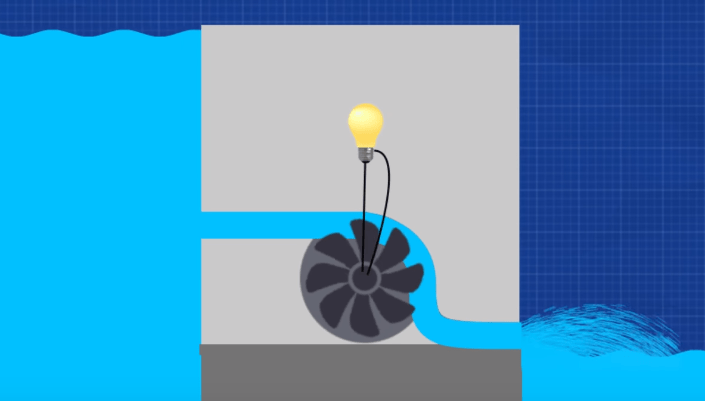
But if we raise one lake higher than the other, then this higher lake now has the potential to flow down to the second one. If we give it a path, it will flow. If we place a turbine in it’s path then we can use it’s energy to power a light, or an entire town.
Back to the electrical circuit, the battery has a potential difference of 1.5V between it’s negative and positive terminal.
Leave a Reply