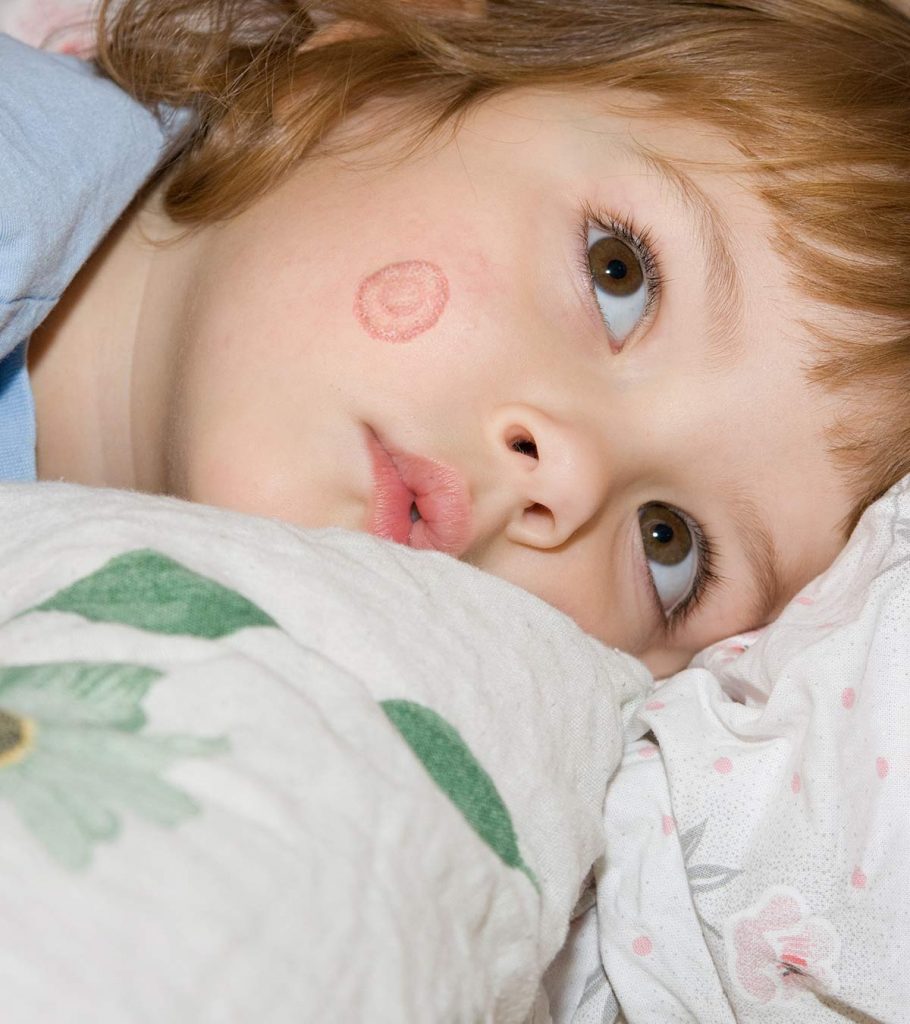
The symptoms of ringworm vary depending on which part of the body is affected. The most common types of ringworm are listed below.
Athlete’s foot
This problem mostly affects teenage boys and men. It usually doesn’t affect children before puberty. Things such as sweating, not drying the feet well after swimming or bathing, wearing tight socks and shoes, and warm weather can play a part in this problem. Symptoms may include:
- Whitening of the skin between the toes
- Scaling of the feet
- Itchy rash on the feet
- Blisters on the feet
Jock itch
This problem is also more common in males. It happens more often during warm weather. It is very rare in females. Symptoms of jock itch may include:
- Red, ring-like patches in the groin area
- Itching in the groin area
- Pain in the groin area
It does not usually involve the scrotum.
Scalp ringworm
Scalp ringworm is highly contagious, especially among children. It happens mainly in children between ages 2 and 10. It rarely happens in adults. Symptoms may include:
- Red, scaly rash on the scalp
- Itchy scalp
- Hair loss on the scalp
- Rash elsewhere on the body
Bad cases of ringworm of the scalp can also develop into a kerion. A kerion is a thick, pus-filled area on the scalp. It can also cause a fever. This can be caused by an overly active response of the immune system or an allergic reaction to the fungus. It may cause a rash elsewhere on the body and tender lymph nodes in the neck.
Nail infection
This type of ringworm causes the nails to become thickened and deformed. This problem affects the toenails more often than the fingernails. It happens more often in adolescents and adults rather than young children. Symptoms may include thickening of the ends of the nails and yellowing of the nails.
Body ringworm
This skin infection is a ring-like rash that appears anywhere on the body or face. It happens in all ages, but is more common in children. It is also more common in warmer climates. The symptoms may include:
- Red, ring-like rash with raised edges
- The middle of the rash may become less red as the lesion grows
- Itching of the affected area
Ringworm may look like many skin problems. Make sure your child sees his or her healthcare provider for a diagnosis.
How is ringworm diagnosed in a child?
Ringworm is usually diagnosed based on a health history and physical exam of your child. The ringworm rash is unique. This makes it easy to diagnose with a physical exam. In addition, your child’s healthcare provider may order a culture or skin scraping of the rash to confirm the diagnosis
Leave a Reply