We measure the potential difference or voltage with the unit of Volts and we use the symbol of capital V to show this. If you look on your electrical appliances you will see a number next to a V, indicating how many volts the product is designed for.
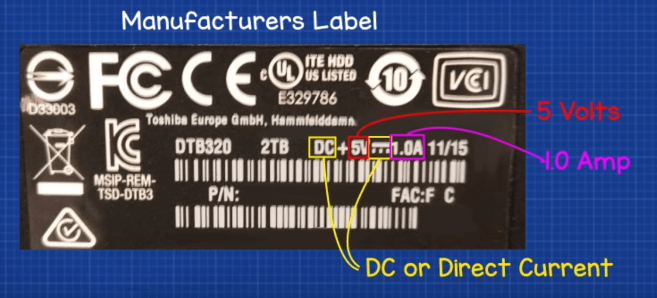
In this example the manufacturers of this usb hard drive are telling us the device needs to be connected to a 5V DC or direct current supply, and it needs 1 Amp of current for the device to work.
The term volt comes from an Italian Physicist called Alessandro Volta who invented the Voltaic Pile which was the first electrical battery that could provide an electrical current at a steady rate in a circuit.
Voltage and Volts are different. Remember Voltage is the pressure and Volts is just the units we measure it in. Same as we know the pipe has pressure but we use units to measure this pressure such as Bar, PSI, kPa etc.
As we saw earlier, we can measure volts with a voltmeter, this can be separate or part of a multimeter. If you don’t have a multi meter yet, I highly recommend you get one. This is the multimeter I would suggest but there are other options available to suit your needs and budget.
To measure Voltage, we have to connect to the circuit in parallel across two points we would like to know the voltage or potential difference for.
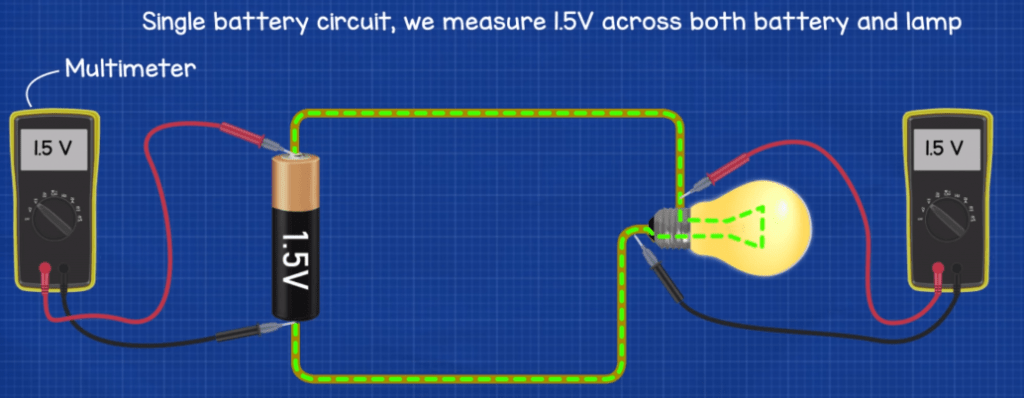
So for a single battery in a circuit then we measure 1.5V across the battery and we also measure 1.5V across the lamp. The battery is providing 1.5V to the lamp and the lamp uses 1.5V to produce light and heat.
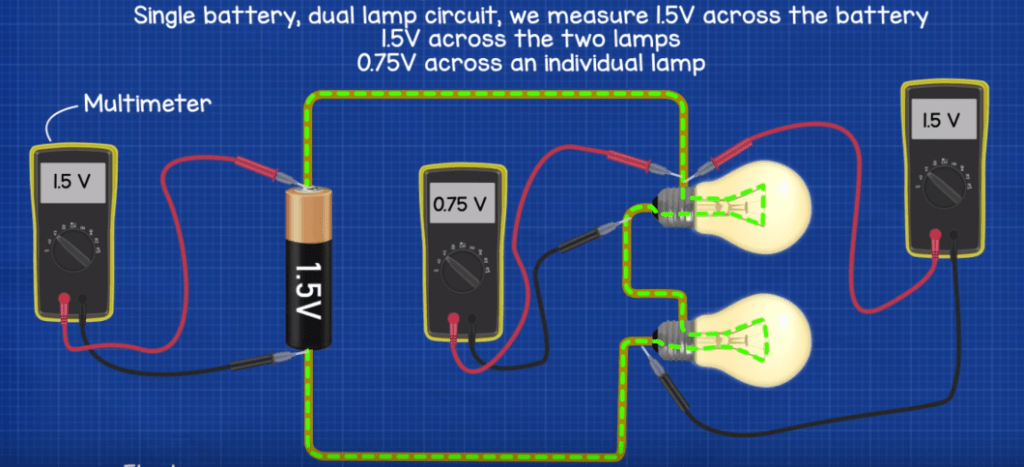
In a two lamp series circuit, we measure 1.5V across the battery, 1.5V across the two lamps combined, but 0.75V across the lamps individually. The voltage or potential has been shared between the lamps to both provide light and heat, the lamps are dimmer because the voltage has been shared or divided. Again we’ll cover this in more detail in our electrical circuit tutorials.
So we saw earlier that voltage and volts are different, voltage is pressure and volts is the unit of measurement, so what does one Volt mean?
One Volt is required to drive one coulomb or approximately six quintillion, two hundred and forty-two quadrillion 6.242×10^18 electrons through a resistance of one ohm in one second.
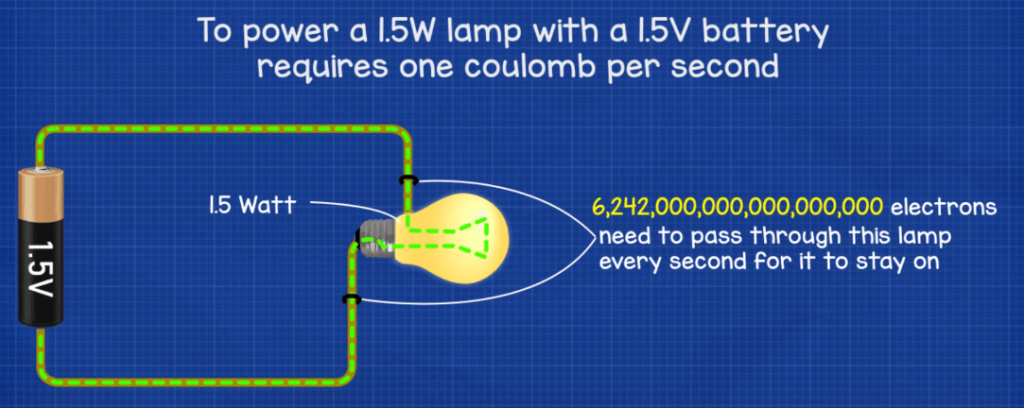
Another way to explain it, to power the 1.5W lamp with a 1.5V battery would require 1 coulomb or six quintillion, two hundred and forty-two quadrillion 6.242×10^18 electrons to flow from the battery and through the lamp every second for it to stay on.
To power a 0.3W lamp with a 1.5V battery, would require 0.2 coulombs or approximately one quintillion, eight hundred and seventy-two quadrillion, six hundred trillion 1.8726×10^18 electrons to flow from the battery and through the lamp every second for it to stay on.
If we tried to use a lower voltage, the lamp would turn on but it decreases in brightness as the voltage decreases, because there is less pressure to force the electrons through it. Less electrons flowing, less light the lamp can produce.
The lamps are only rated for a certain voltage and current. If we use a higher voltage then the lamp will become brighter because more electrons are flowing through. But if we add too much voltage then the lamp will blow because too many electrons tried to pass through at once.
Leave a Reply